Commercial Roofing Systems: A Complete Guide for Facility Teams
The most common commercial roofing systems are single-ply membranes (TPO, PVC and EPDM), modified bitumen, built-up roofing, metal and roof coatings. The right one depends on your roof's slope, traffic, climate and budget.
6 questions, about a minute
Trusted by the teams behind national portfolios
Inside this guide
Jump to What You Need
Side by side
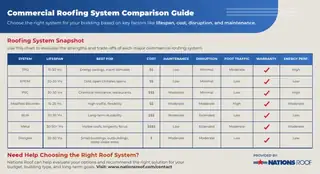
Compare Commercial Roof Systems at a Glance
Every system below can perform well for decades when it is matched to the building and maintained. Use this table to narrow the field, then confirm with an inspection.
Take this chart with youGet this comparison as a free, printable Roofing System Pocket Card.
Aging warehouses, light-industrial, retail or office
$-$$
Low
Minimal
Low
Available
High
StrongModerateLimited
Cost: $ lowest to $$$$ highest relative installed cost
Lifespans reflect typical results with proper installation and regular maintenance. Actual life depends on climate, drainage, rooftop traffic and maintenance history. Spray foam is covered in the spray foam and coatings section below.
Not sure which system fits your facility?
Download the full Roof Systems Comparison Guide for lifespan, cost, and maintenance details on every system above.
Every commercial roof system belongs to one of four families. Pick a family to see how it is built, what it is best for, and how its systems compare.
Family 01 · Single-ply membranes
Single-Ply Membrane Roofing: TPO, PVC and EPDM
One factory-made layerLightweightWelded or taped seams
A single-ply membrane roof is one layer of flexible, factory-made sheet installed over insulation on a low-slope or flat roof. The three common membranes are TPO, PVC and EPDM. They are lighter and faster to install than multi-ply systems, and their quality is controlled at the factory rather than on the roof.
Lifespan
15 to 30 yrs
Relative cost
$$ to $$$
Best for
Large, flat roofs where installed cost and reflectivity matter
Thermoplastic vs. thermoset membranes
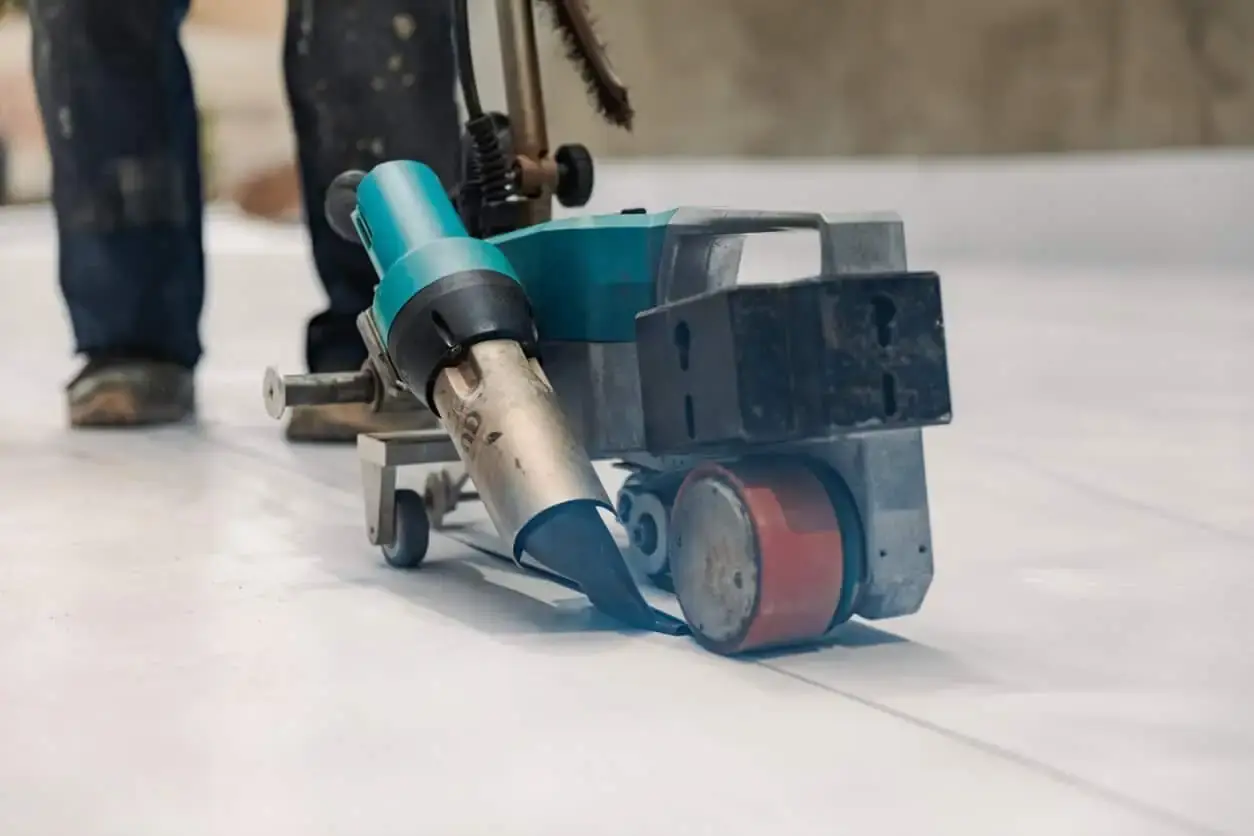
TPO and PVC are thermoplastics. Their seams are heat-welded, which fuses the sheets into one continuous membrane. EPDM is a thermoset rubber. Its seams are joined with tape or adhesive. Welded seams are typically stronger, while EPDM's rubber stays flexible in extreme cold.
TPO roofing
Thermoplastic polyolefin
TPO is the most widely installed single-ply membrane on commercial buildings. A white TPO surface reflects sunlight, which helps lower cooling loads in warm climates. It is cost-effective, heat-welded at the seams, and can be mechanically attached, fully adhered or ballasted.
Typical Service Life
15 to 30 years
Best For
Energy savings in hot climates, on large, flat roofs like data centers, retail and distribution centers.
PVC is a heat-welded thermoplastic membrane with strong resistance to chemicals, grease and fire. That makes it the usual choice where exhaust, oils or process chemicals reach the roof. It costs more than TPO and is the usual choice for restaurants, labs and other buildings with chemical exposure.
Typical Service Life
20 to 30 years
Best For
Facilities that need chemical resistance and long-term durability, including restaurants, labs, retail, commercial and industrial properties.
EPDM is a synthetic rubber membrane with a long track record on commercial roofs. It comes in large sheets, which means fewer seams, and it stays flexible through freeze and thaw cycles. It resists UV, weather, chemicals and grease, has a low installation cost, and comes in black, white or gray.
Typical Service Life
20 to 30 years
Best For
Budget-focused projects in variable climates, including cold climates and large, open roof spans.
Several pliesPuncture resistantBuilt for foot traffic
Modified bitumen and built-up roofing are multi-ply systems made from layers of asphalt and reinforcing sheets. Several layers mean several lines of defense, so a puncture in the top layer rarely becomes a leak. These systems are heavier and slower to install than single-ply, and they are common on schools, government buildings and roofs with heavy foot traffic.
Lifespan
15 to 30 yrs
Relative cost
$$ to $$$
Best for
Schools, government buildings and roofs with heavy foot traffic
Modified bitumen roofing
Mod-bit
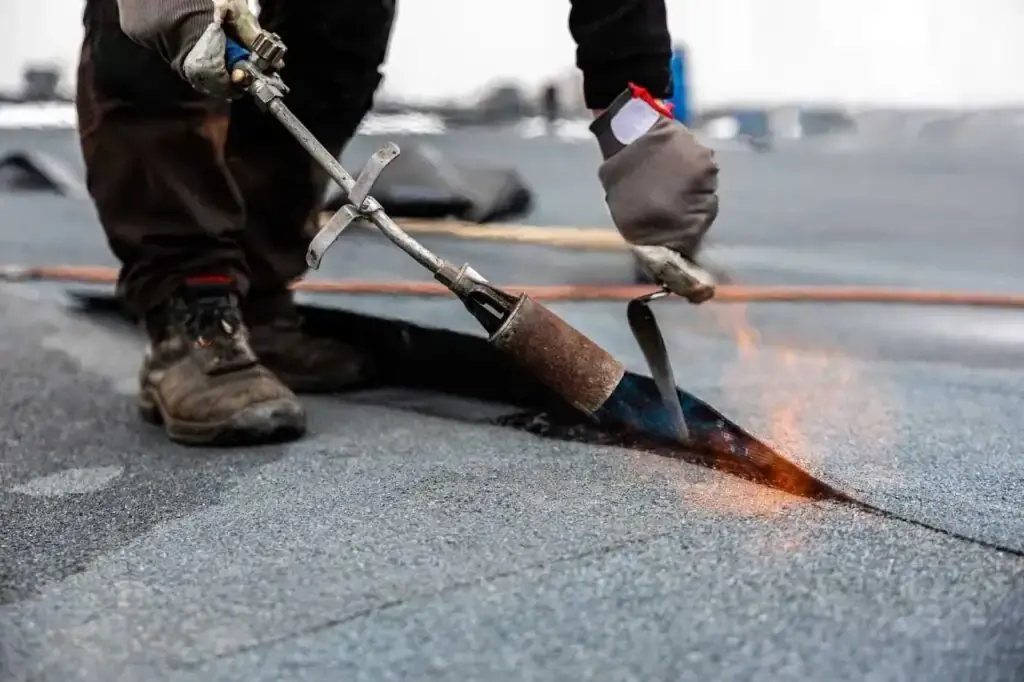
Modified bitumen is asphalt blended with rubber or plastic modifiers and supplied in rolls. It is usually installed as a two-ply system, applied with heat (torch), hot asphalt, cold adhesive or self-adhered sheets. A granulated cap sheet protects it from UV and foot traffic, and it has strong resistance to wind, fire and hail.
Typical Service Life
15 to 25 years
Best For
High-traffic commercial rooftops, including schools and government buildings.
Built-up roofing alternates layers of asphalt and reinforcing felt, finished with gravel or a reflective coating. It is one of the oldest commercial roofing methods and remains in use where redundancy and impact resistance matter more than install speed.
Typical Service Life
20 to 30 years
Best For
Facilities needing long-term protection, such as industrial and government buildings.
Not sure a multi-ply asphalt system is right for your building?
Family 03 · Metal roofing
Commercial Metal Roofing Systems
Longest service lifeLow or steep slopeCan retrofit over old roofs
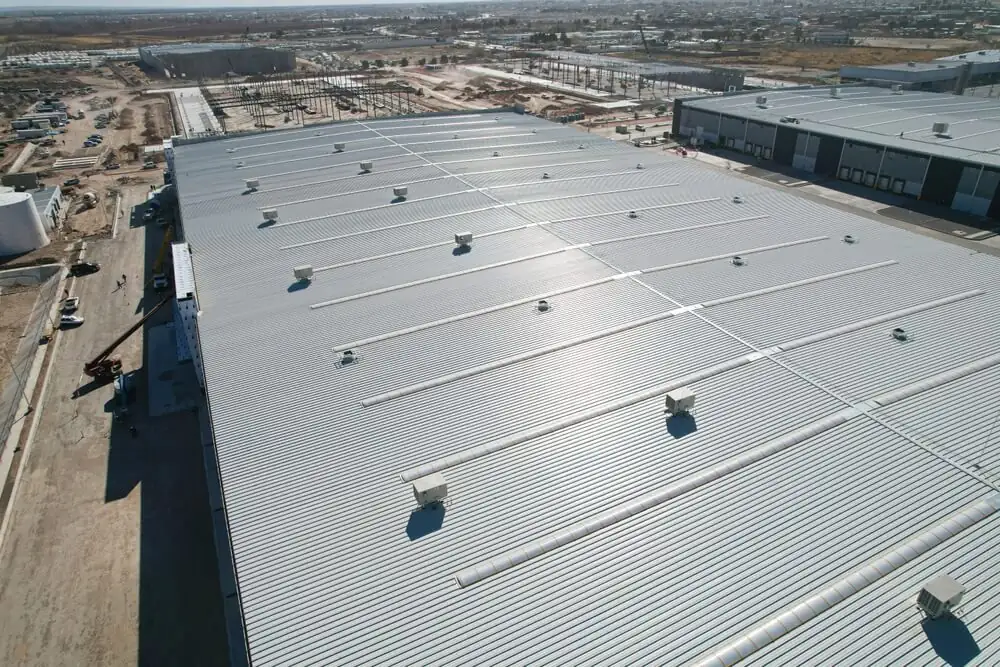
Commercial metal roofs are steel or aluminum panels joined at raised seams or fastened through the panel. They have the longest typical service life of the common commercial systems and work on both low-slope and steep-slope roofs. The main trade-off is a higher upfront cost.
Lifespan
30 to 50+ yrs
Relative cost
$$$$
Best for
Long-term ROI and visible rooftops
Retrofitting over an existing roof
Metal can often be installed over an existing low-slope roof using a framing system that adds slope. This can avoid tear-off and improve drainage at the same time.
Standing seam vs. exposed-fastener panels
Standing seam
Concealed clips, raised seams
Panels lock together at raised seams with concealed clips, so no fasteners pass through the weather surface.
No exposed fasteners in the weather surface
Common where appearance matters
Exposed-fastener panels
Such as R-panel
Panels are screwed through the face of the panel. They cost less to install but need fastener and washer maintenance over time.
Lower installed cost
Fasteners and washers need periodic maintenance
Not sure metal is right for your building?
Family 04 · Seamless systems
Spray Foam and Liquid-Applied Roofing
No seamsHandles many penetrationsRenewable surface
Spray foam and liquid-applied systems are installed as a liquid that cures into a seamless surface. With no seams, there are fewer places for water to enter, which suits roofs with many penetrations or irregular shapes.
Lifespan
Coatings add 5 to 15 yrs
Relative cost
Coatings: $ to $$
Best for
Irregular roofs, many penetrations, restoring a sound roof
Spray polyurethane foam (SPF)
Seamless foam with a protective coating
SPF is sprayed onto the roof deck, where it expands into a rigid, seamless layer that also adds insulation. A protective elastomeric coating goes on top to shield the foam from UV. The coating is renewed periodically, which extends the roof's life without a tear-off.
Typical Service Life
20+ years with periodic recoating
Best For
Irregular roofs, roofs with many penetrations, and buildings that need more insulation.
1SprayFoam is sprayed onto the roof deck, where it expands into a rigid, seamless layer that also adds insulation.
2CoatA protective elastomeric coating goes on top to shield the foam from UV.
3RenewThe coating is renewed periodically, which extends the roof's life without a tear-off.
Roof coatings and liquid-applied membranes
Silicone, acrylic and other elastomerics
Silicone, acrylic and other elastomeric coatings are applied over an existing roof to seal it and reflect heat. When the existing roof is still structurally sound, a coating can restore it and delay replacement. Coatings are not a fix for a roof with widespread wet insulation; an inspection with moisture testing tells you which applies.
Typical Added Life
5 to 15 years on a structurally sound roof with dry insulation.
Not sure spray foam or a coating is right for your building?
Decision guide
How to Choose a Commercial Roof System
Start with the building, not the material. Six factors narrow most decisions to two or three systems, and an inspection of the existing roof settles the rest.
01
Factor 1
Roof slope
Flat and low-slope roofs need a membrane, multi-ply or spray foam system. Steeper roofs open up metal and other steep-slope options.
Hot, sunny regions favor reflective surfaces such as white TPO or PVC. Cold regions with freeze and thaw cycles favor flexible membranes such as EPDM. Hail and high-wind zones call for impact and uplift ratings.
Cold storage, healthcare, food processing and data centers each bring their own requirements for temperature, moisture control and uptime during the work.
The best system is the one the owner can keep warranty-compliant. Manufacturer warranties require installation by a certified contractor and documented maintenance.
Points toward
Certified installationDocumented maintenance
Weighing all six at once?
Answer 6 quick questions about your building, roof, climate and budget, and get a matched roof system.
By facility type
Best Roof Systems by Facility Type
Our crews have completed projects in all 50 states and across every major facility type. Here are the systems most often specified for each. The existing roof, the deck and the budget decide the final recommendation.
Most often specifiedAlso common
Commercial roof systems most often specified by facility type
What is the most common commercial roofing system?
TPO is the most widely installed single-ply membrane on commercial buildings today, followed by EPDM and PVC. Single-ply membranes as a group cover most low-slope commercial roofs.
What is a membrane roof?
A membrane roof is a flat or low-slope roof waterproofed with a continuous sheet, such as TPO, PVC or EPDM, rather than overlapping shingles or panels. The membrane is installed over insulation and sealed at every seam, edge and penetration.
What is the difference between TPO and PVC?
Both are heat-welded single-ply membranes. PVC has greater resistance to chemicals, grease and fire, which suits restaurants and food processing. TPO costs less and is highly reflective, which suits large roofs in warm climates.
Which commercial roof system lasts the longest?
Metal roofs typically last 30 to 50 years or more. EPDM, PVC and built-up roofs typically last 20 to 30 years, TPO 15 to 30 years, and modified bitumen 15 to 25 years with proper maintenance. Regular inspections and prompt repairs do more for service life than the choice of material alone.
What is the best roof for a flat commercial building?
There is no single best system. TPO is the most common choice for cost and reflectivity, PVC for chemical exposure, EPDM for cold climates, and modified bitumen for heavy foot traffic. For a recommended starting point, answer six quick questions with Find My Ideal Roof System .
Can a commercial roof be restored instead of replaced?
Often, yes. If the deck is sound and the insulation is dry, a restoration coating or recover can extend the roof's life without a full tear-off. A moisture survey during an inspection confirms whether restoration is an option.
Can Nations Roof service any roof system?
Yes. Nations Roof installs, repairs and maintains every major commercial roof system, and performs warranty-compliant work as a certified installer for the manufacturers listed on our Qualifications page.
How do I keep my roof warranty valid?
Schedule regular inspections, keep records of all roof work, and use a certified contractor for every repair. Unauthorized repairs and missed maintenance are the most common reasons a manufacturer warranty is voided.