TPO Roofing for Commercial Buildings: Guide, Installation, Lifespan and Cost
TPO (thermoplastic polyolefin) is a single-ply roofing membrane for flat and low-slope commercial roofs. Its seams are heat-welded into one continuous sheet, and its white surface reflects sunlight to help lower cooling loads. A well-installed TPO roof typically lasts 15 to 30 years.
TPO is a white, single-ply thermoplastic membrane. Sheets are rolled out over insulation, fastened or adhered to the roof, and joined with hot air so the seams fuse into one watertight surface.
TPO specificationsTypical values. Confirm against the specified product data sheet.
TPO roofing specifications
Material
Thermoplastic polyolefin sheet with a polyester reinforcing scrim
Common thicknesses
45, 60 and 80 mil. Thicker sheets add puncture resistance and longer warranty options
Attachment methods
Mechanically attached, fully adhered, induction-welded plates or ballasted
Seams
Hot-air welded into one continuous membrane
Surface colors
White, gray and tan as standard, plus specialty colors
Reflectivity
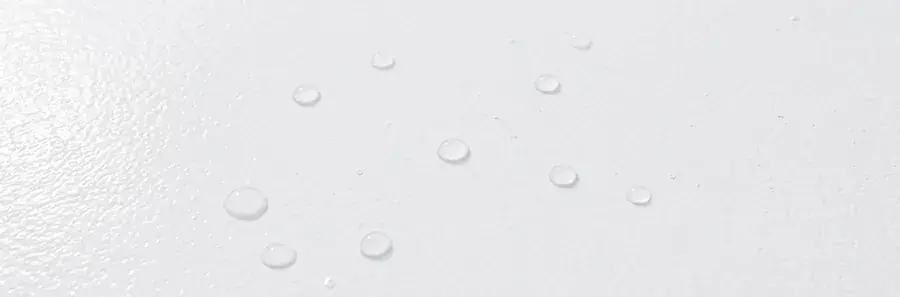
High. White membranes reflect most sunlight, which helps lower cooling loads
Durability
UV-resistant and recyclable
Typical service life
15 to 30 years with proper installation and maintenance
Relative installed cost
$$ on a scale of $ to $$$$
Warranty
Manufacturer system warranties available. The term depends on thickness, assembly and a certified installer
Fire and wind ratings
Set by the full roof assembly (deck, insulation, attachment), not the membrane alone
Inside a TPO roof
A typical TPO roof assembly, top to bottom
TPO membrane
Heat-welded seams, white reflective surface
Cover board
Protects insulation, adds puncture resistance
Insulation
Polyiso boards, often tapered for drainage
Vapor retarder
Where the building calls for one
Structural deck
Steel, concrete or wood
Layers vary by building. A recover installs the new membrane and cover board over the existing roof when it is dry and code allows it.
Comparing TPO with other systems?
Download the full Roof Systems Comparison Guide for lifespan, cost, and maintenance details on TPO and every other major system.
TPO's strengths are installed cost, welded seams and reflectivity. Its limits are grease and chemical resistance and a dependence on careful seam welding.
Advantages
Cost-effective to install
One of the lower installed costs among commercial membranes, especially on large, open roofs.
Welded seams
Hot-air welds fuse the sheets together, which makes seams stronger than taped or glued joints.
Reflective surface
White TPO reflects sunlight, which helps lower cooling loads in warm, sunny climates.
Lightweight
Adds little load to the structure and can often be installed over an existing roof.
Flexible attachment
Mechanically attached, adhered or induction-welded systems fit most decks and wind zones.
Fast to install, low maintenance
Installs quickly with minimal disruption and needs little routine upkeep.
Repairable and recyclable
Damaged areas are heat-welded with new membrane, and the membrane itself is recyclable.
Limitations
Grease and chemical exposure
Oils, grease and some chemicals degrade TPO faster than PVC. Restaurant and processing roofs usually need PVC.
Installer-dependent seams
Weld quality depends on heat, speed and a clean surface. Seams should be probe-tested on every job.
Harder to repair as it ages
Weathered TPO needs extra cleaning and preparation before new material will weld to it.
Puncture risk on thinner sheets
Foot traffic, dropped tools and hail can puncture thinner membranes. Walkway pads help.
Shorter top-end life
TPO typically lasts 15 to 30 years, while metal often reaches 30 to 50 years or more.
Installation
How Is TPO Roofing Installed?
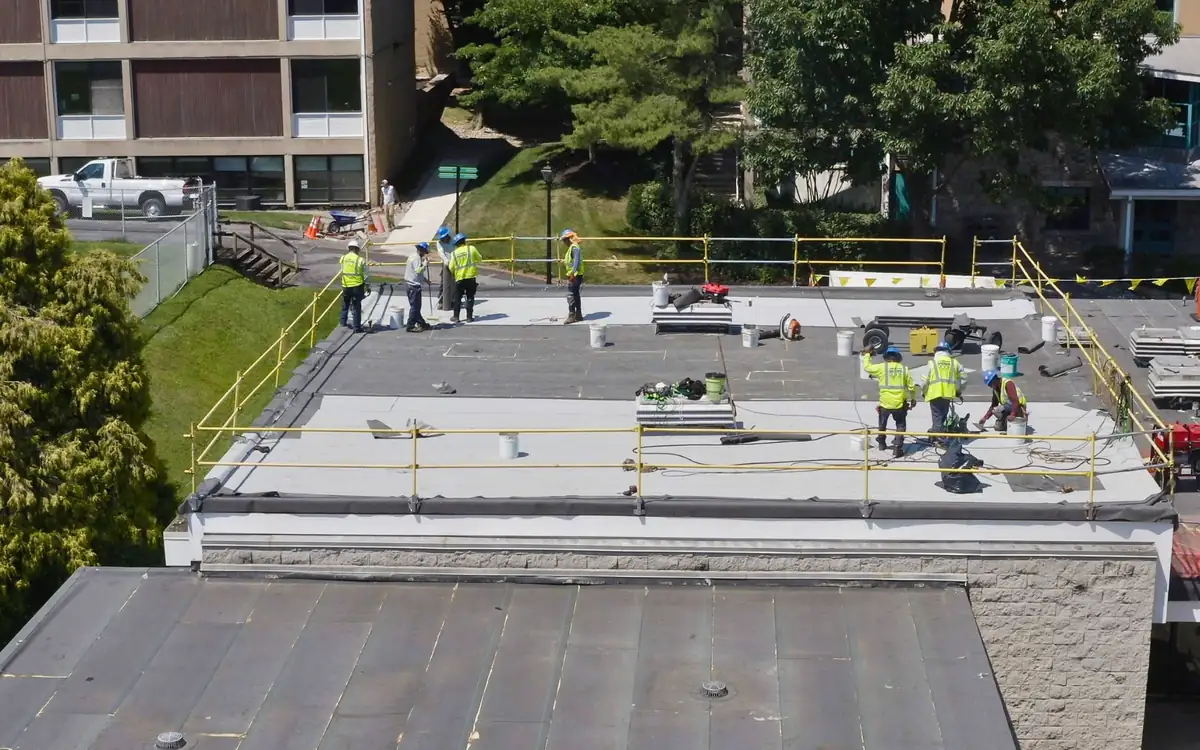
A TPO roof goes on in seven steps, from a moisture survey of the existing roof to probe-testing every welded seam. Most of the roof's long-term performance is decided at the seams and details.
1
Inspect and core-cut the existing roof
A moisture survey and core cuts show what is under the surface and whether the roof can be recovered or needs a full tear-off.
2
Prepare the deck
Remove failed roofing where needed, repair damaged decking and replace any wet insulation.
3
Install insulation and cover board
Boards are fastened or adhered to the deck. Tapered insulation is added where water needs help reaching the drains.
4
Lay out and attach the membrane
Sheets are rolled out and secured by fasteners along the seams, full adhesive or induction-welded plates, depending on the wind design.
5
Heat-weld the seams
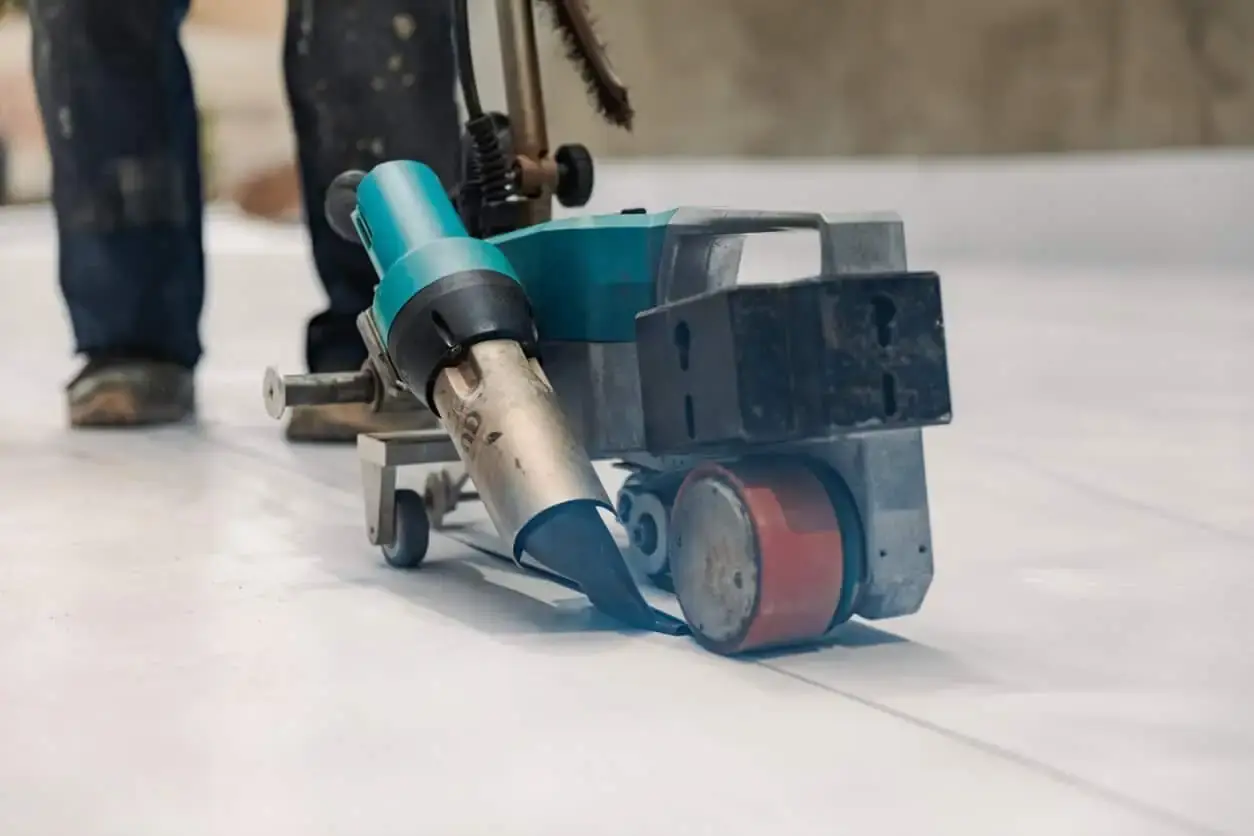
Robotic and hand welders use hot air to fuse each overlap into a single, continuous sheet.
6
Flash edges, curbs and penetrations
Pre-formed corners, pipe boots and edge metal seal every place the roof meets a wall, unit or pipe.
7
Probe-test and final inspection
Every seam is probed for gaps. Warranted roofs get a manufacturer inspection before the warranty is issued.
Step 5: hot-air welding a seam
Warranty starts with the install
Manufacturer warranties require a certified installer and documented details. Nations Roof installs TPO as a certified installer for the manufacturers listed on our Qualifications page.
Lifespan
How Long Does a TPO Roof Last?
15 to 30years
A commercial TPO roof typically lasts 15 to 30 years. Where a roof lands in that range depends less on the membrane itself and more on how it was installed and how it is maintained.
Membrane thickness
Thicker sheets resist punctures and weathering longer.
Seam and detail quality
Most TPO leaks start at a seam, flashing or penetration.
Drainage
Water that ponds for days ages the membrane faster.
Inspections and maintenance
Small repairs caught early keep the roof in service longer.
Climate and exposure
Sun, heat, hail and rooftop exhaust all shorten service life.
Typical service life by system
With proper installation and regular maintenance
TPO
15 to 30 yrs
EPDM
20 to 30 yrs
PVC
20 to 30 yrs
Mod Bit
15 to 25 yrs
Built-Up
20 to 30 yrs
Metal
30 to 50+ yrs
01020304050+
Years
Ranges match the commercial roof system comparison. Actual life depends on climate, drainage, rooftop traffic and maintenance history.
Cost
What Drives TPO Roof Cost?
TPO sits in the $$ tier, among the most cost-effective commercial membranes. The final price for a specific roof comes down to six factors, so a written estimate follows an inspection.
Relative installed cost by system$ lowest to $$$$ highest
$ to $$
Coatings
$$
TPOEPDMMod Bit
$$$
PVCBuilt-Up
$$$$
Metal
Tear-off or recover
Removing the old roof adds labor and disposal. A recover over a dry, sound roof costs less.
Insulation
Required R-value, tapered insulation for drainage and cover board all add material.
Attachment method
Mechanically attached systems usually cost less than fully adhered ones.
Membrane thickness
60 and 80 mil sheets cost more than 45 mil, and support longer warranties.
Access and complexity
Building height, staging, rooftop units and the number of penetrations.
Warranty level
Longer, more comprehensive manufacturer warranties require more of the system.
Get a written number for your roof
A free inspection confirms the existing roof's condition and whether a recover is possible, then becomes a written TPO estimate.
Most TPO problems start at seams, flashings and drains, not in the open field of the membrane. Caught early, nearly all of them are repairable with heat-welded patches and new flashing.
Seam separation
What causes it
Welds that were made too hot, too cold or over a dirty surface can open over time.
How we repair it
Clean and probe the seam, then re-weld it or heat-weld a cover strip over it.
Punctures and tears
What causes it
Foot traffic, dropped tools, hail and wind-blown debris.
How we repair it
Cut out or cover the damage with a heat-welded patch, and add walkway pads on service routes.
Flashing failures
What causes it
Curbs, walls, pipes and rooftop units are where most leaks start.
How we repair it
Reflash with pre-formed TPO accessories and new edge metal where needed.
Ponding water
What causes it
Water that stands for more than 48 hours after rain from poor slope or clogged drains.
How we repair it
Clear drains and add crickets or tapered insulation to move water off the roof.
Wet insulation
What causes it
Small, unnoticed leaks soak the insulation under the membrane.
How we repair it
Find wet areas with a moisture survey and replace those sections before they spread.
Surface wear and aging
What causes it
Years of sun and weather leave the membrane chalky and harder to weld.
How we repair it
Prepare the surface for repairs, then evaluate a restoration coating or recover if the roof is sound.
Seeing one of these on your TPO roof?
Our crews repair TPO roofs from 40+ branch locations. See how commercial roof repair works, or start with an inspection.
TPO is the system most often specified for warehouses, offices, retail and data centers: large, flat roofs where installed cost and reflectivity matter most.
An aging TPO roof has three paths. An inspection with a moisture survey shows which one fits, based on the condition of the membrane, the insulation and the deck.
Maintain
Keep it in warranty
Scheduled inspections, cleaning and small repairs keep a TPO roof performing and its warranty valid.
Choose TPO for cost and reflectivity on large, flat roofs. Choose PVC for grease and chemical exposure, EPDM for extreme cold, and modified bitumen for heavy foot traffic.
Answer 6 quick questions about your building, roof, climate and budget, and get a matched roof system.
TPO Roofing FAQs
What is TPO roofing?
TPO (thermoplastic polyolefin) is a single-ply membrane used on flat and low-slope commercial roofs. Sheets are fastened or adhered over insulation and heat-welded at the seams into one continuous, watertight surface. White TPO is highly reflective.
How long does a TPO roof last?
A commercial TPO roof typically lasts 15 to 30 years. Membrane thickness, seam quality, drainage and regular maintenance decide where a roof falls in that range.
Is TPO better than EPDM?
Neither is better for every roof. TPO has heat-welded seams and a reflective white surface that suits warm climates. EPDM is a rubber membrane that stays flexible in extreme cold and has a longer typical service life at the low end of the range.
Is TPO a good choice for a restaurant or food processing roof?
Usually not. Grease, oils and some chemicals from kitchen and process exhaust degrade TPO faster. PVC is the more common choice for those roofs.
Can TPO be installed over an existing roof?
Often, yes. A recover installs a cover board and new TPO over the existing roof when it is structurally sound, the insulation is dry and local code allows another layer. Core cuts and a moisture survey confirm it.
Can a TPO roof be repaired?
Yes. Damaged areas are cleaned and covered with heat-welded TPO patches, and failed seams are re-welded. Older, weathered TPO needs extra surface preparation before new material will weld to it.
How do I keep a TPO roof warranty valid?
Schedule regular inspections, keep records of all roof work and use a certified contractor for every repair. Unauthorized repairs and missed maintenance are the most common reasons a manufacturer warranty is voided.






 TPO
 EPDM
 PVC
 Mod Bit
 Built-Up
 Metal