How Commercial Roofs Fail (And What Most Teams Miss Until It’s Too Late)
Commercial roofs rarely fail all at once.
They fail in stages.
And by the time the problem becomes visible inside the building, the issue has often been developing for months or even years.
That’s the gap this video highlights — and where most facility, property, and procurement teams get caught off guard.
Let’s break down what’s actually happening on commercial roofs, why failures occur, and how to prevent them before they turn into costly disruptions.
Roof Failure Doesn’t Start With a Leak
The biggest misconception about roofing is that failure begins when water enters the building.
In reality, that’s the final stage.
Most failures start much earlier with small, often invisible issues:
- Minor membrane separation
- Early flashing deterioration
- Drainage inefficiencies
- Repeated thermal movement stress
At this stage, the roof is still technically “working.”
But performance is already declining.
For facility teams, this is where proactive inspection matters most — because once water enters the system, the cost, scope, and urgency increase significantly.
The Most Common Causes of Commercial Roof Failure
While every building is different, most failures trace back to a handful of root causes.
1. Water Intrusion at Critical Points
Roof systems don’t usually fail in open field areas — they fail at transitions.
Common failure points include:
- Penetrations (HVAC units, vents, conduits)
- Flashing details
- Seams and terminations
- Roof edges and parapets
These areas experience the most movement and stress, making them the most vulnerable over time.
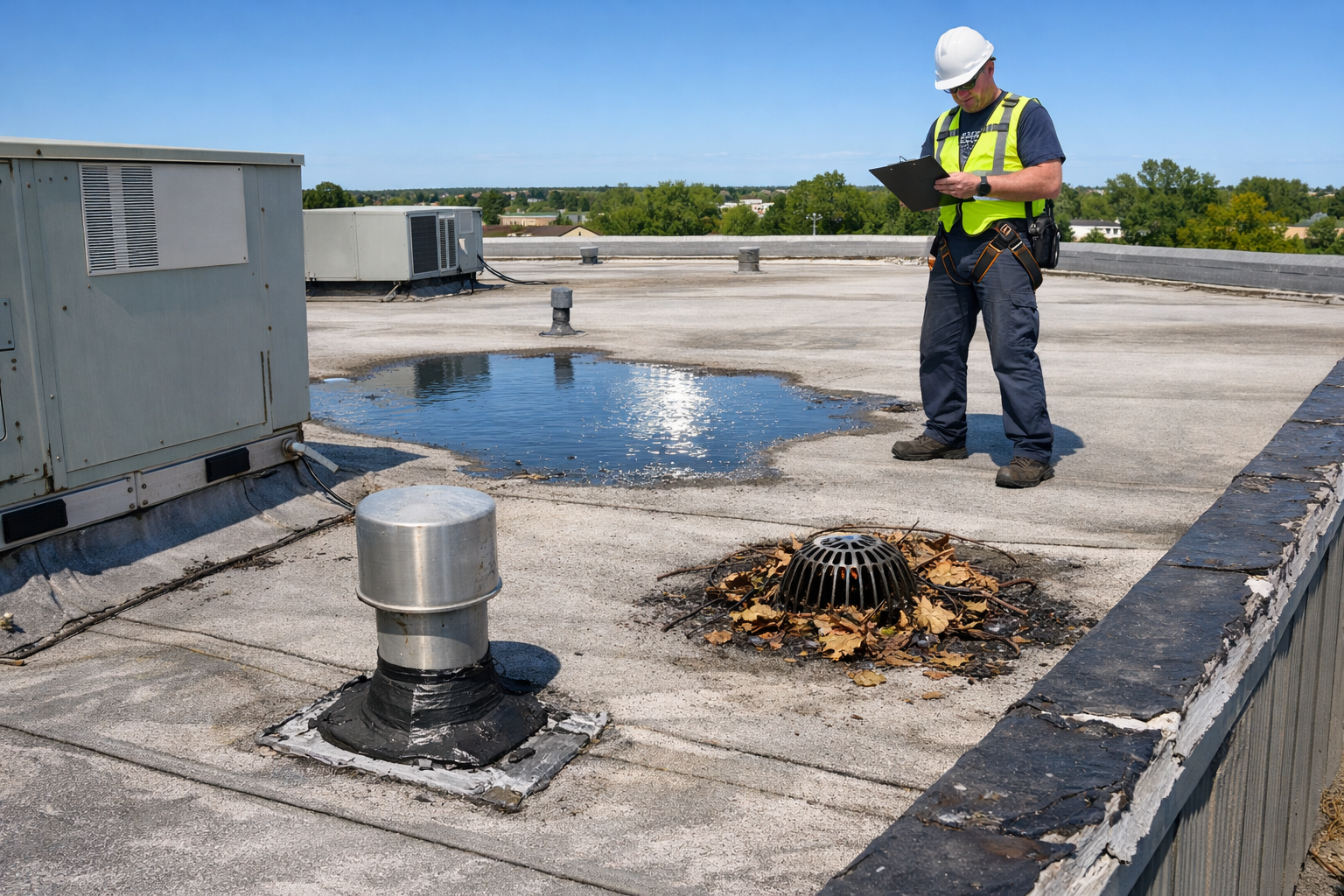
2. Drainage Issues and Ponding Water
Flat roofs are designed to drain, not hold water.
When drainage systems are compromised:
- Water begins to pond
- Membrane stress increases
- Seams and flashing degrade faster
Standing water for more than 48 hours is often an early warning sign of future failure.
Left unaddressed, this can lead to structural stress and accelerated system breakdown.
3. Deferred Maintenance
This is one of the most common and most preventable causes.
Small issues like:
- Clogged drains
- Loose flashing
- Minor punctures
…can quickly escalate when routine maintenance is delayed.
For many organizations managing multiple facilities, maintenance gets deprioritized until a failure forces action — which is when costs are highest.
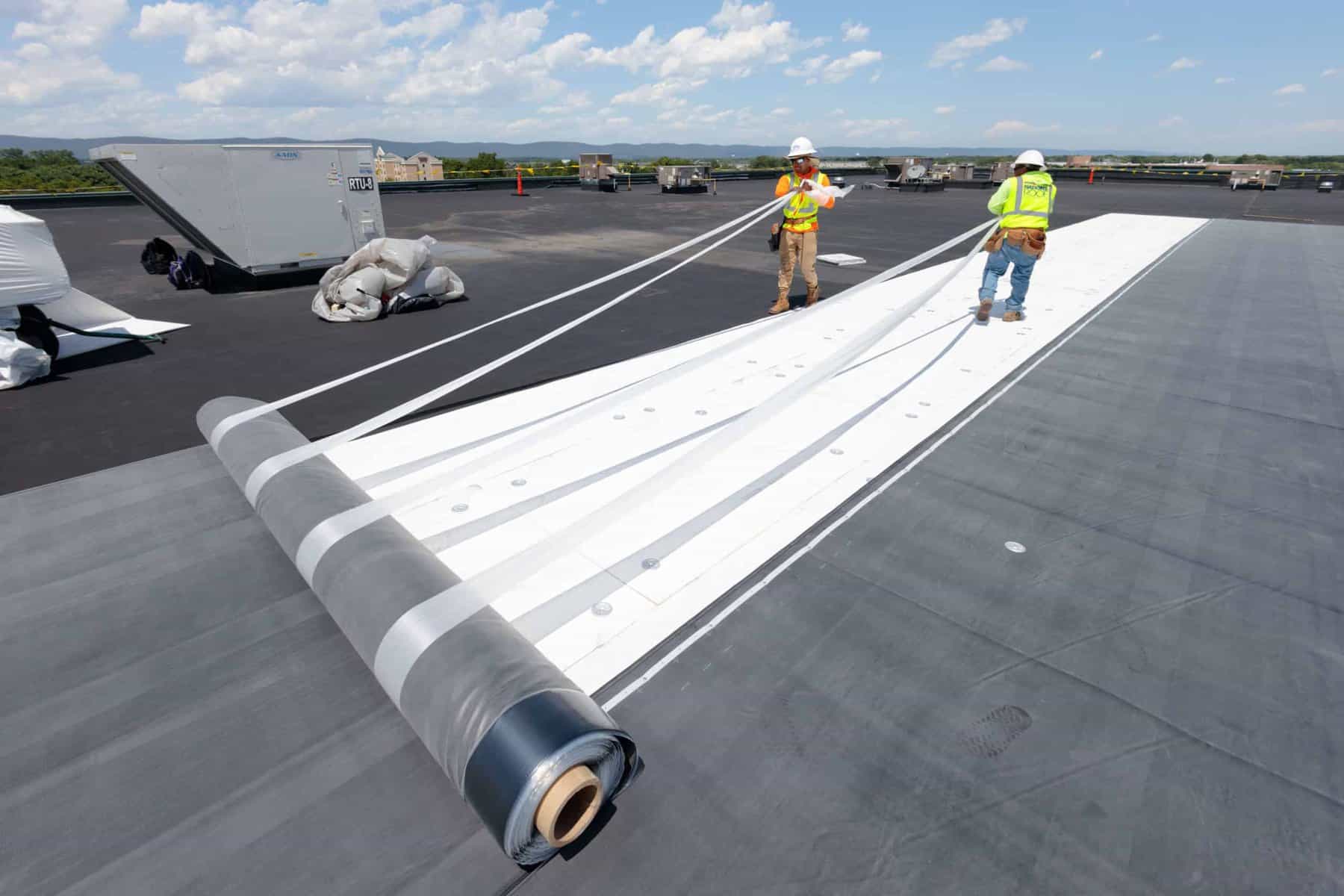
4. Installation or Repair Quality
Even a high-quality roofing system can fail prematurely if it’s not installed or repaired correctly.
Key risks include:
- Improper seam welding
- Incorrect flashing installation
- Non-compliant repair methods
This is especially important when work is performed by non-certified vendors, which can also void manufacturer warranties.
As outlined in your broader materials, certified, warranty-compliant workmanship is critical to long-term performance and risk reduction .
5. Environmental and Operational Stress
Commercial roofs take constant exposure from:
- UV radiation
- Temperature fluctuations
- Wind uplift
- Foot traffic from maintenance teams
Over time, these factors create cumulative wear — especially in high-traffic or high-exposure environments like industrial facilities, retail rooftops, or healthcare systems.
Why Most Failures Go Undetected
One of the key insights from the video is this:
Roof problems are rarely visible until they’ve already progressed.
Unlike other building systems, roofing issues are:
- Out of sight
- Gradual in development
- Easy to ignore until they impact operations
By the time you see:
- Interior water stains
- Ceiling damage
- Active leaks
…the issue has already moved beyond a simple repair.
The Real Cost of Waiting
Roof failure is not just a roofing issue. It’s an operational issue.
Depending on the facility type, failures can lead to:
- Lost revenue (retail, logistics, manufacturing)
- Tenant dissatisfaction (commercial real estate)
- Safety risks (healthcare, education, industrial)
- Emergency repair premiums
- Warranty complications
For procurement and ownership teams, this directly impacts total cost of ownership — not just repair cost.
What Proactive Teams Do Differently
The difference between reactive and proactive roof management is simple:
Visibility and timing.
High-performing facility and property teams focus on:
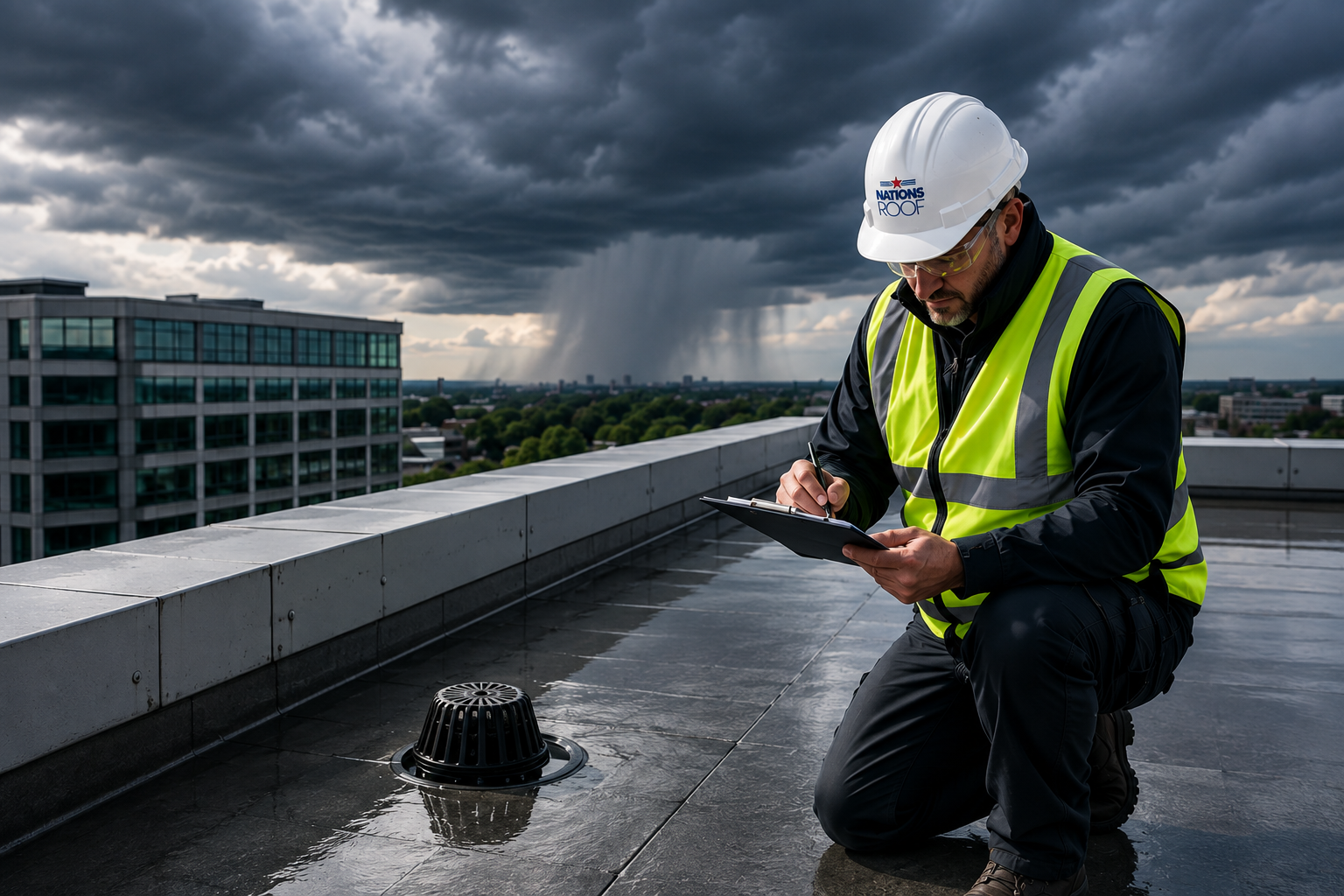
1. Scheduled Inspections
Routine inspections identify issues early — before they escalate into disruptions.
2. Drainage and Debris Management
Keeping drains, scuppers, and gutters clear prevents one of the most common failure triggers.
3. Documentation and Tracking
Having access to:
- Service history
- Photos
- Warranty information
…makes it easier to make informed decisions and justify budget planning.
4. Partnering With Certified Roofing Providers
Working with certified crews ensures:
- Repairs meet manufacturer specifications
- Warranties remain valid
- Work is done safely and correctly
A Better Way to Think About Roof Performance
Instead of asking:
“Is the roof leaking?”
The better question is:
“What condition is the roof trending toward?”
Because every roof is on a lifecycle curve:
- New → Stable → Aging → At Risk → Failing
The goal isn’t just to fix problems.
It’s to intervene before the roof reaches the failure stage.
Final Takeaway
Commercial roofs don’t fail suddenly.
They fail gradually, predictably, and often preventably.
The teams that avoid disruption, control costs, and protect their buildings are the ones who:
- Understand where failures start
- Monitor performance over time
- Act before issues escalate
That’s the difference between reacting to roof problems and managing them.