
By Nations Roof on Jan 5, 2026, 10:55:12 AM
Understand your roof’s condition, estimated remaining life, and next steps.
A roof condition grade helps you turn inspection findings into a practical plan. For commercial building owners, property managers, and facility teams, it provides a starting point for deciding what to maintain, what to repair, and when to budget for larger work.
Nations Roof’s Roof Health Index uses five grades: A, B, C, D, and F. Each grade pairs a condition description with an estimated remaining life range. Together with the inspection findings, these details help you prioritize work across one building or an entire portfolio.
How an Inspection Becomes a Roof Condition Report
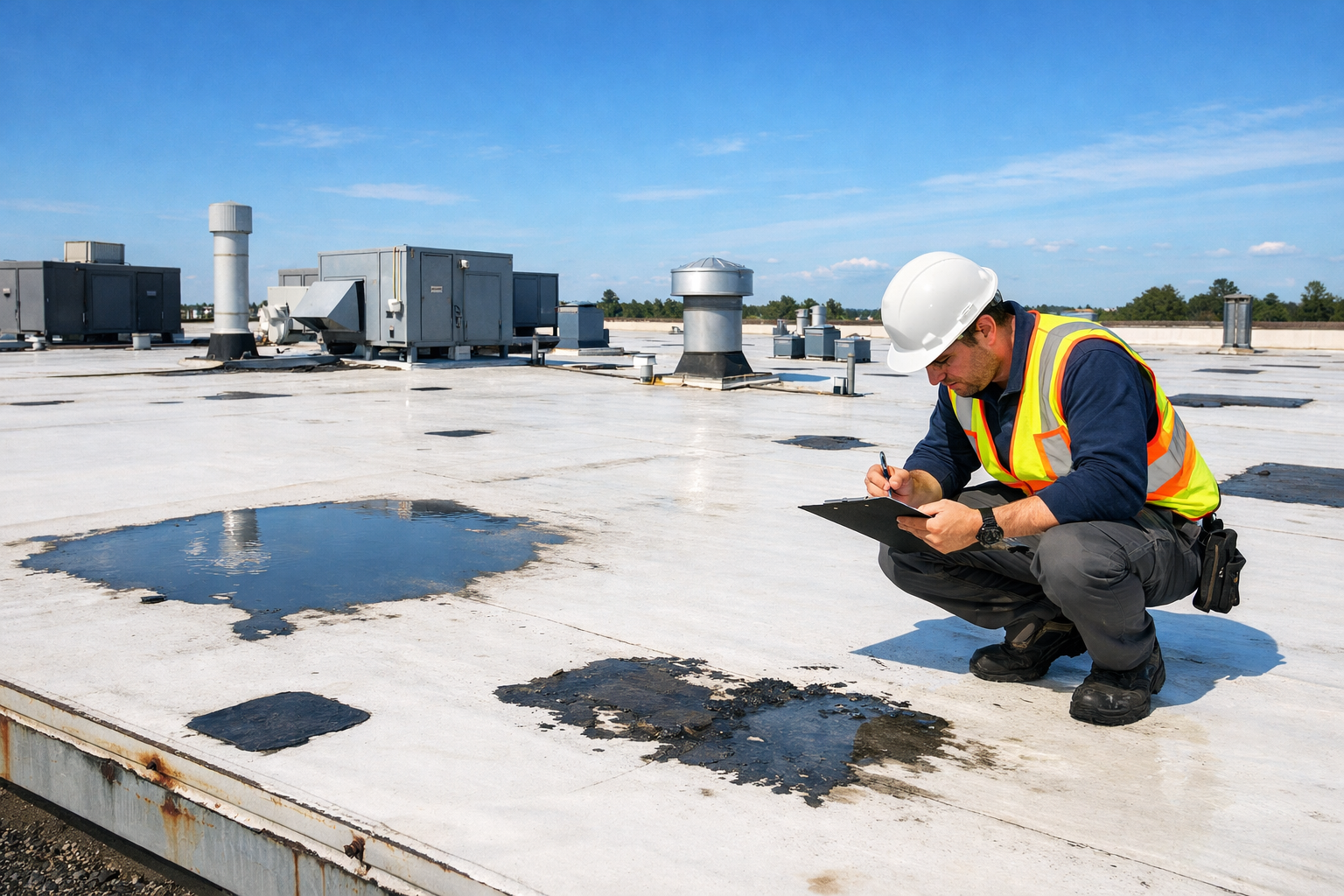
A roof grade starts with an on-site inspection. The inspection documents visible conditions and identifies areas that need maintenance, repairs, or further evaluation.
 Items reviewed may include:
-
Roof surface or membrane condition, seams, flashings, and penetrations
-
Drainage, ponding areas, gutters, and downspouts
-
Signs of weather damage or deterioration
-
Previous repairs and their current condition
-
Available leak and maintenance history
-
Visible signs of moisture damage or deck deterioration
-
Roof access and safety concerns
Inspection observations, photographs, and recommendations help explain the grade. Your Roof Condition Report brings those findings together with estimated remaining life, repair priorities, and information to support budget planning. Conditions that cannot be confirmed visually may require additional evaluation.
Understanding the Roof Health Index
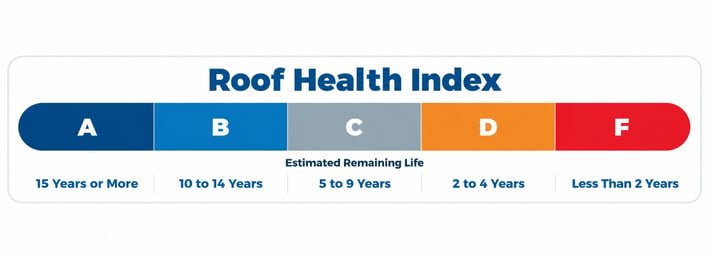
A – Excellent (15 years or more)
Excellent condition with minimal deterioration.
B – Good (10 to 14 years)
Good condition with minor aging or repairs needed.
C – Fair (5 to 9 years)
Fair condition with noticeable deterioration and increasing repairs.
D – Poor (2 to 4 years)
Poor condition and approaching replacement.
F – Failing (Less than 2 years)
At or near failure; replacement should be prioritized.
Estimated remaining life should be adjusted based on the roof system, installation quality, moisture, leak history, repairs, maintenance, drainage, and overall condition. These ranges are planning estimates, not a guarantee of future performance.
What Each Grade Means for Your Next Steps
A: Maintain and Protect
An A-rated roof is in excellent condition with minimal deterioration and an estimated 15 years or more remaining. Continue routine inspections and preventive maintenance, and address minor issues as they arise. A strong grade is a reason to protect the roof’s condition through consistent care.
B: Repair Early and Plan Ahead
A B-rated roof is in good condition, with minor aging or repairs needed and an estimated 10 to 14 years remaining. Complete recommended repairs, maintain drainage, and keep a record of changes. Include the roof in long-term capital planning while continuing proactive maintenance.
C: Evaluate Options and Build a Budget
A C-rated roof is in fair condition, with noticeable deterioration and increasing repairs. Its estimated remaining life is 5 to 9 years. Prioritize repairs that address current issues and begin evaluating future restoration or replacement options. The appropriate approach depends on inspection findings and the roof system’s suitability for further work.
D: Move Into Replacement Planning
A D-rated roof is in poor condition and approaching replacement, with an estimated 2 to 4 years remaining. Develop a replacement budget and timeline, consider project phasing, and address urgent issues. Evaluate whether interim repairs can provide a practical bridge to the planned project.
F: Prioritize Replacement
An F-rated roof is at or near failure, with less than 2 years of estimated remaining life. Replacement should be prioritized. Review the findings promptly, address active leaks or safety concerns, and establish a project plan. Where appropriate, temporary repairs may help manage immediate issues while replacement is arranged.
Why Estimated Remaining Life Needs Context
The same age does not mean the same condition. Roof system, installation quality, maintenance, drainage, moisture, and repair history all influence the assessment. A roof’s grade should be read alongside its documented condition and recommended actions, rather than treated as a countdown based only on installation date.
The framework follows a 20-year expected-life reference, but individual roof systems and conditions vary. An A grade does not mean every roof will achieve the same total lifespan, and an F grade does not mean it is appropriate to wait nearly two years before acting.
Condition and Urgency Work Together
Recurring leaks, deteriorating seams or flashings, drainage problems, and repairs that no longer hold warrant closer review. Suspected moisture damage or deck concerns may also require additional investigation. These findings help the roofing team assess condition and recommend next steps.
Building use also matters when prioritizing work. A leak above sensitive equipment, patient areas, food production, or valuable inventory may require a faster response. The building’s operations help determine the urgency and project approach alongside the roof’s physical condition.
Address active leaks and safety concerns promptly, regardless of the letter grade. If the condition description and estimated remaining life appear inconsistent, ask your roofing team to explain the assessment before using it to make budget decisions.
Turn Your Roof Grade Into a Plan
-
Keep inspections and condition records current.
-
Complete recommended maintenance and repairs.
-
Review C-rated roofs for future capital needs and suitable restoration or replacement options.
-
Build replacement plans for D-rated roofs and prioritize F-rated roofs.
-
Compare priorities across your portfolio using condition, building use, and budget requirements.
Nations Roof helps commercial property owners and facility teams translate inspection findings into practical next steps. Our team can review your Roof Condition Report, discuss repair and replacement options, and help you build a plan that supports your building’s needs.
Schedule a roof inspection or contact your Nations Roof team to review your current roof condition and planning priorities.

How Commercial Roofs Fail
Roofing in Occupied Buildings: A Lifecycle Planning Guide for Commercial Properties