By Nations Roof on Feb 9, 2026, 3:26:00 PM
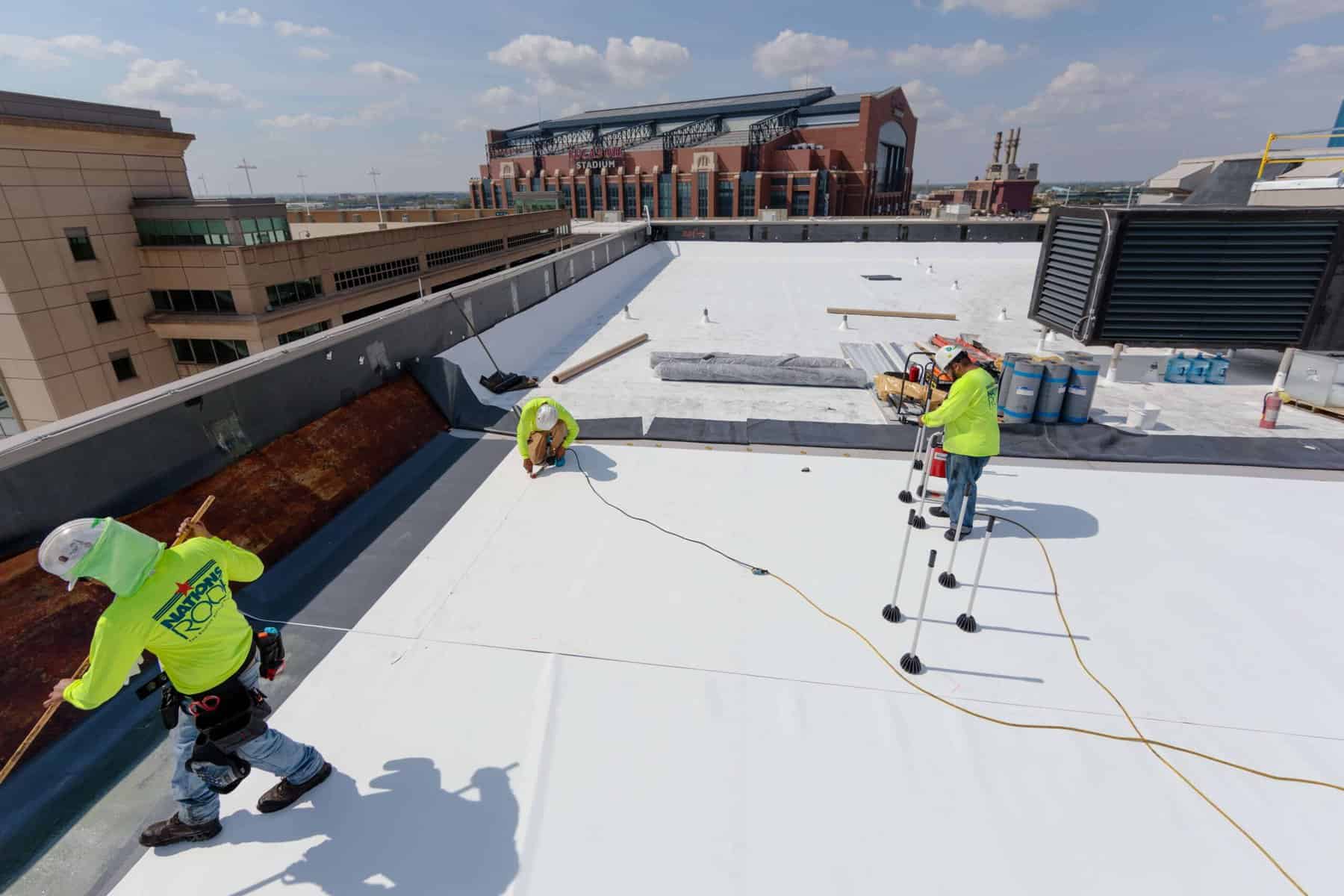
Choosing the right commercial roofing system impacts your building’s performance, energy costs, and long-term asset value. Two of the most common single-ply membranes for low-slope roofs are TPO (Thermoplastic Polyolefin) and PVC (Polyvinyl Chloride).
At Nations Roof, we install and service both, and we’re certified by all major manufacturers. That means whichever system you choose, your roof remains warranty-compliant and built to last.
What Is TPO Roofing?
TPO is the most widely used membrane for low-slope commercial roofs.
How it’s built:
-
Single-ply sheets reinforced with polyester mats
-
Heat-welded seams for strong, watertight bonds
-
Available in white, gray, and tan, in multiple thicknesses (45–80 mil)
Key advantages:
-
UV and heat resistance helps reduce cooling costs
-
Flexible in colder climates → less cracking
-
Mold- and chemical-resistant
-
Available with warranties of up to 30 years
What Is PVC Roofing?
PVC membranes have been trusted in commercial roofing for more than 60 years.
How it’s built:
-
Two PVC layers with a polyester reinforcement scrim
-
Heat-welded seams; optional rib for a standing-seam look
-
Plasticizers in the bottom layer improve flexibility during installation
Key advantages:
-
Superior chemical resistance — ideal for restaurants, airports, and industrial sites
-
Strong fire resistance with Factory Mutual/UL-approved assemblies
-
10–30 year warranty options
-
100% recyclable membrane


TPO vs PVC: Side-by-Side Comparison
Choosing between TPO and PVC often comes down to performance in your specific environment. Use this side-by-side comparison to weigh their strengths in areas like chemical resistance, lifespan, and energy efficiency.
How to Decide for Your Building
Selecting the right system depends on more than price:
-
Current roof condition: Can it be reroofed or must it be replaced?
-
Building use: Chemical exposure, HVAC loads, or foot traffic may drive the choice.
-
Location & climate: Energy efficiency needs differ by region.
-
Future plans: If long-term durability is critical, warranty terms may weigh heavily.
That’s where Nations Roof makes the difference:
Download Your Comparison Guide
This in-depth resource includes a printable side-by-side matrix, cost considerations, and maintenance insights to help you make the right decision for your portfolio.
Schedule an Inspection
Every building is unique. That’s why Nations Roof partners with property owners, facility managers, and procurement teams to recommend and install the right system for your needs.
You might also like this video:
TPO vs EPDM vs Modified Bitumen Explained in Under 3 Minutes
TPO vs EPDM Roofing: Differences, Lifespan & Best Uses

Built-Up Roof vs. TPO: Pros, Cons & Key Differences